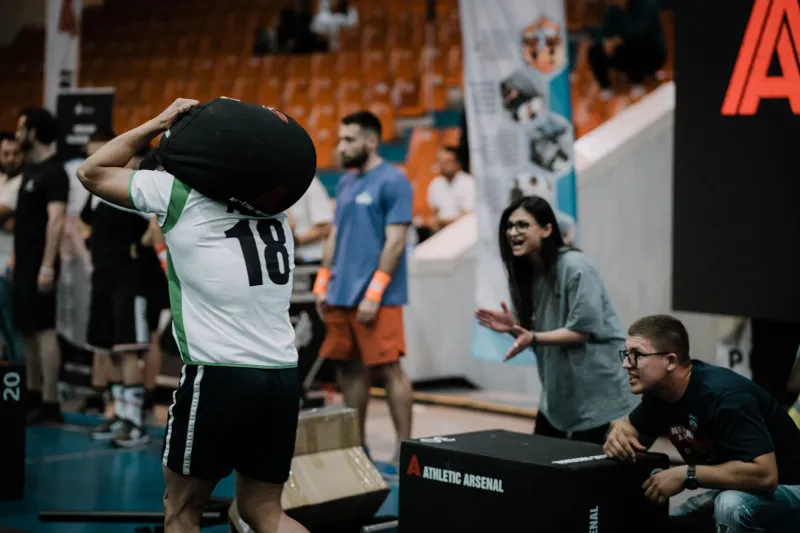
You Own the Gym — So Why Does the Arena Feel Like Enemy Territory?
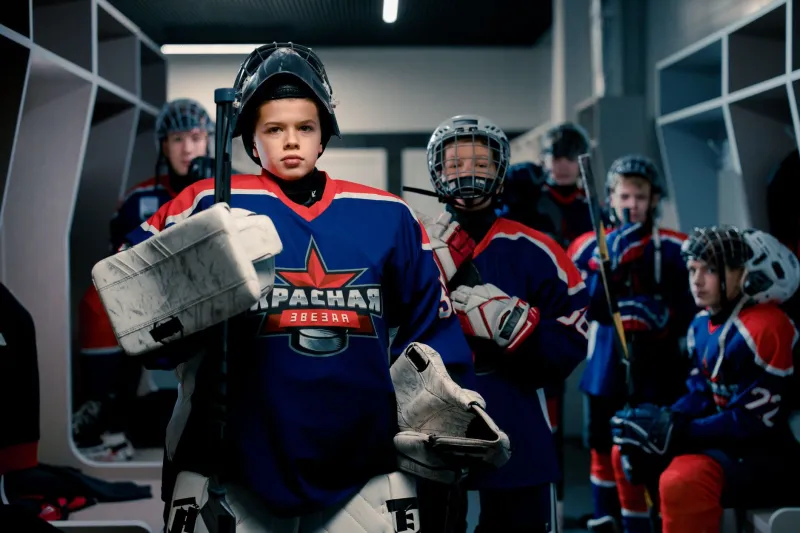
You've had those training sessions. The ones where everything clicks, your body does exactly what you tell it to, and you walk out thinking, yeah, I've got this. You've put in the reps, dialed in the technique, and visualized the moment a hundred times over.
Then competition day arrives. The crowd shows up, the stakes feel real, and somewhere between the warm-up and the starting signal, that version of you just... vanishes. You compete stiff, second-guess every decision, and leave wondering who that nervous stranger was wearing your jersey.
You're not alone. This is one of the most common — and most frustrating — experiences in all of sport. And here's the thing nobody tells you clearly enough: the problem almost never lives in your muscles. It lives between your ears.
The Illusion of Practice-Mode Confidence
Here's a truth that stings a little. The confidence you feel during training isn't always real confidence — sometimes it's just comfort. You know the environment. You know the people watching. You know there are no consequences if you mess up a rep. Your nervous system is calm, your brain isn't on high alert, and your body moves freely because nothing feels on the line.
That's not a bad thing. That's how skill gets built. But it creates a dangerous illusion: you start to believe that how you perform in practice is a direct preview of how you'll perform when it counts.
It isn't. Not automatically.
The competitive environment introduces variables your training never fully replicates — crowd noise, unfamiliar opponents, time pressure, the emotional weight of wanting it badly. Your nervous system reads those signals as a threat, and suddenly you're running on adrenaline instead of rhythm. Movements that felt automatic now feel manual. Decisions you'd make in a heartbeat take three heartbeats too long.
This isn't weakness. It's biology. But biology can be trained.
Where Visualization Goes Sideways
Most athletes have heard about visualization. A lot of athletes actually do it. Fewer do it in a way that actually helps.
The most common mistake? Visualizing the outcome instead of the process. You picture yourself on the podium, arms raised, crowd going wild. That feels great. It also does almost nothing to prepare your nervous system for the actual experience of competing.
Worse, outcome-focused visualization can quietly build anxiety. You spend so much mental energy imagining the win that the gap between that fantasy and the messy reality of competition becomes a source of pressure rather than preparation.
Effective visualization is specific, sensory, and process-driven. Instead of seeing yourself win, you mentally rehearse the doing — your breathing pattern at the start, the feel of your feet on the floor, the sound of the environment, the decision you make in the third minute when things get hard. You're not watching a highlight reel. You're running a simulation.
The goal is to make competition feel familiar before you ever step into it.
Over-Preparation Anxiety Is a Real Thing
Some athletes don't underperform because they didn't prepare enough. They underperform because they prepared so intensely that competition feels like the ultimate test of their entire identity — and that's way too much weight to carry into any arena.
When every training session feels like it's leading to the one moment that will define you, your nervous system treats competition like a survival event. And humans don't perform their best when their brain thinks they're in danger.
This is where perspective work becomes a legitimate training tool. Not the soft, motivational-poster kind — the structured kind. Ask yourself honestly: What's the actual worst-case outcome here? Walk through it. Sit with it. You'll usually find that the catastrophe your brain is bracing for isn't really catastrophic at all.
Athletes who compete with freedom aren't the ones who care less. They're the ones who've made peace with the outcomes they can't control, which frees up their focus for the things they can.
Making Competition Feel Like Practice
This is the real goal — not to eliminate nerves, but to reduce the psychological distance between your training environment and your competitive one. Here's how to start closing that gap.
Simulate pressure in practice — consistently. Add stakes to your training sessions. Time yourself. Train in front of people. Create mini-competitions with training partners. Give yourself consequences for missed targets. The more your nervous system associates performing under observation with safety and routine, the less it panics when the real thing arrives.
Develop a pre-competition routine and stick to it religiously. Routine is an anchor. When everything around you feels unfamiliar and heightened, a consistent warm-up sequence, playlist, or breathing protocol signals to your brain that this is known territory. It's a cue that says: we've been here before. We know what to do.
Use process cues, not outcome cues. In the moments before and during competition, your self-talk should be about actions, not results. Not I need to win this but stay low, breathe, trust the first step. Action-based cues keep your brain in execution mode instead of evaluation mode.
Do a post-competition debrief — without judgment. After every competitive performance, good or bad, sit down and write out what you did well, what broke down, and what one thing you'd adjust. Treat competition like data, not verdict. Athletes who review performance without emotionally spiraling are the ones who improve fastest.
The Athlete You Are in Practice Already Exists at Competition
Here's what's worth holding onto when the confidence gap feels impossibly wide: you're not a different athlete on competition day. The skills are there. The preparation is there. What shifts is your mental state — and mental states are trainable.
The version of you that dominates in the gym isn't some alternate, idealized self. That's actually you, operating in a low-threat environment. Your job isn't to become that athlete in competition. Your job is to build the mental infrastructure that lets that athlete show up regardless of the environment.
It takes repetition. It takes honest self-examination. It takes being willing to train your mind with the same seriousness you train your body.
But you've already proven you can do hard things. You show up to practice when you don't want to. You push through the sets that hurt. You come back after bad days.
Bridging this gap is just another version of that same work. And if there's one thing we know around here — you're not the type to back down from it.