Sitting Still Isn't Falling Behind — It's Catching Up to Yourself

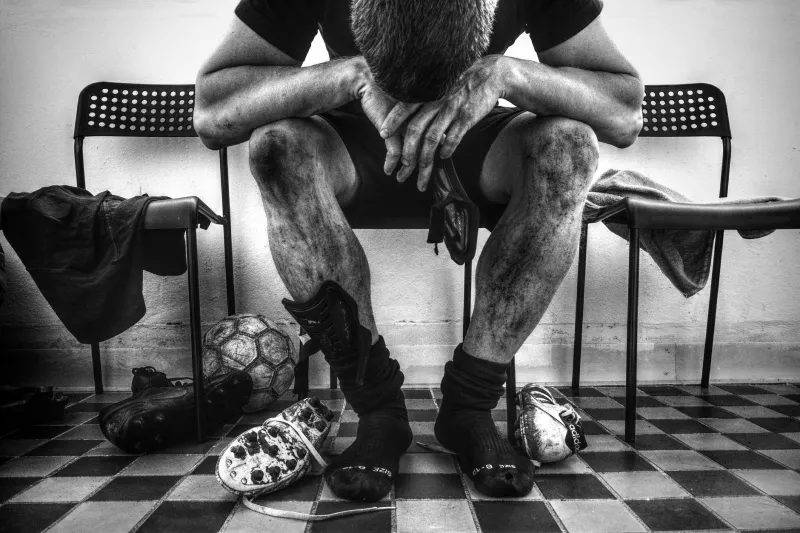
The training block is over. The season ended. Your coach told you to take two weeks. Maybe four. And now you're lying on the couch at 10 a.m. on a Tuesday feeling like every competitor you've ever faced is out there right now getting faster, stronger, and hungrier while you slowly become irrelevant.
Sound familiar?
That feeling isn't a quirk. It's one of the most common psychological experiences among serious athletes, and it's one of the most misunderstood. Because here's what's actually true: the off-season isn't where athletes lose ground. It's where the ground they already gained gets locked in.
Why Rest Feels Like Failure
For driven athletes, training isn't just a habit — it's an identity. You're the person who shows up. Who doesn't quit. Who outworks the room. When the calendar suddenly says rest, the brain reads it as stop being that person.
That's the trap.
The anxiety isn't really about fitness. It's about identity disruption. When your sense of self is tightly coupled to effort and output, stillness reads as threat. Your nervous system doesn't distinguish between "I'm recovering strategically" and "I've given up." Both feel the same in your gut.
Add in social media — watching training highlights, seeing someone post a PR during your deload week — and the anxiety compounds fast. You're not just resting. You're watching other people not rest. The comparison machine runs hot even when your body is on pause.
What's Actually Happening When You Step Back
Here's what the science says, and it matters that you know this:
Your muscles are rebuilding at the structural level. Training creates micro-damage — that's the mechanism. But the adaptation — the actual growth — happens during recovery. Chronic training without adequate deload phases suppresses this process. Your body doesn't get stronger during hard sessions. It gets stronger after them, given enough time and the right conditions.
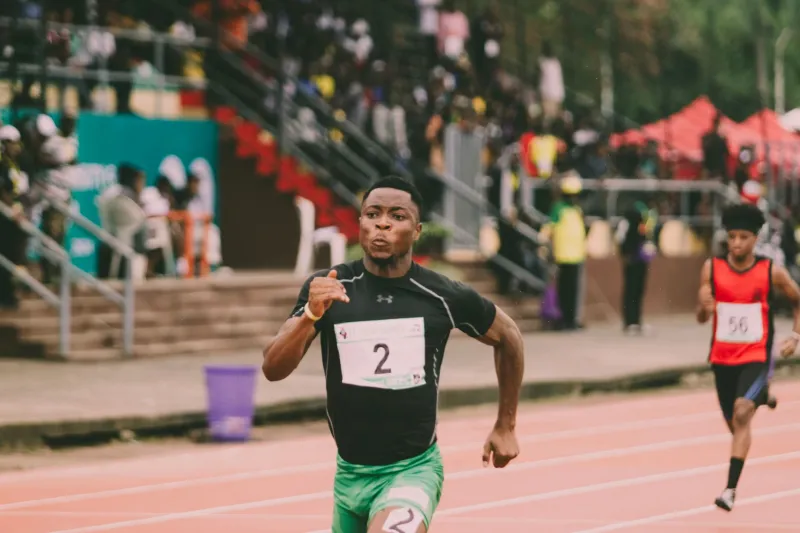
Your nervous system is resetting. The central nervous system takes a beating during intense training blocks in ways that don't show up on a scale or in a mirror. CNS fatigue affects coordination, reaction time, power output, and mood. Extended rest is often the only thing that fully resolves it. Elite sprinters, powerlifters, and contact sport athletes are particularly vulnerable to this — and the ones who manage it well consistently outlast the ones who don't.
Your hormonal environment is rebalancing. Sustained high-intensity training elevates cortisol, suppresses testosterone, and disrupts sleep architecture. Off-season rest allows the endocrine system to recalibrate — which directly impacts your capacity to train hard in the next block.
Your brain is consolidating. Motor learning — the kind that makes skills automatic — happens during sleep and rest, not during practice. The technical work you put in all season gets encoded more deeply when you step back. You come back sharper, not just fresher.
How the Best Athletes Reframe This Phase
Elite performers across sports don't treat the off-season as a pause. They treat it as a different kind of work — one that just doesn't look like work from the outside.
NBA players who've extended their careers into their late thirties talk openly about treating the off-season as a maintenance and recalibration period rather than a grind. NFL veterans describe it as the time when they study, reconnect with their bodies, and fix the things the season broke. Endurance athletes periodize their entire year around it — the off-season isn't an accident in their schedule, it's the foundation of the next season's build.
The mental shift is this: instead of framing rest as the absence of progress, frame it as a different type of progress. One that's invisible but compounding.
A Practical Framework for Getting Through It Mentally
Define what "active recovery" means for you. Complete inactivity isn't the goal for most athletes. Light movement, mobility work, cross-training in something low-stakes and enjoyable — these keep the body engaged without accumulating the kind of stress the off-season is designed to clear. Know the difference between rest and atrophy, and stay on the right side of the line.
Set a non-training intention for the period. What aspect of your life has the training schedule been crowding out? Sleep? Relationships? A skill outside your sport? The off-season is a window, not a void. Fill it with something that feeds you as a person, not just as an athlete.
Schedule your return. The anxiety of the off-season is partly about open-endedness. If you know when you're coming back and what the first week of training looks like, the rest period stops feeling like freefall. Give it a boundary and it becomes manageable.
Track how you feel, not what you're doing. During a training block, you track output — reps, times, loads. During a recovery phase, track input. How's your sleep quality? Energy levels? Mood? Appetite? These are legitimate performance metrics. Pay attention to them.
The Athlete Who Rests Is the Athlete Who Lasts
The off-season doesn't separate committed athletes from uncommitted ones. It separates the athletes who understand the long game from the ones who are still chasing the feeling of effort for its own sake.
Resting isn't giving up. It's not falling behind. It's not going soft.
It's trusting the work you already did enough to let it finish landing.
Train hard. Rise stronger. And when the calendar says rest — actually rest.