Find the Crack Before the Wall Falls: A Field Guide to Diagnosing Your Training Weak Points

Here's something most athletes don't want to hear: the plateau you're sitting in right now probably didn't sneak up on you. It built. Slowly. One overlooked rep, one compensated movement, one skipped mobility session at a time — until suddenly the numbers stopped moving and you couldn't figure out why.
Fighting like Ana isn't just about grinding harder. It's about training smarter, and that starts with being brutally honest about where your game has holes. The good news? You don't need a full sports science lab to figure it out. You just need the right framework and the willingness to look.
Why Athletes Miss Their Own Weak Points
The human brain is wired to protect your ego a little. When you're deep in a training block, you naturally gravitate toward what you're already good at. Bench feels strong, so you bench. Your sprint times are climbing, so you sprint more. Meanwhile, the hip mobility that's quietly sabotaging your squat depth? That gets a five-minute stretch on a good day.
This isn't laziness — it's just how people work. But in competitive sports and serious fitness, the thing that beats you is almost never your strength. It's the weakness you never addressed.
The goal here is to build a habit of self-assessment that runs parallel to your training — not something you do once when things fall apart, but a regular diagnostic practice that catches problems while they're still small.
Start With Video: The Uncomfortable Truth Mirror
If you're not filming your training sessions, you're flying blind. Video analysis is one of the most underused tools in the everyday athlete's toolkit, and it costs you nothing but a phone propped against a water bottle.
Here's what to look for:
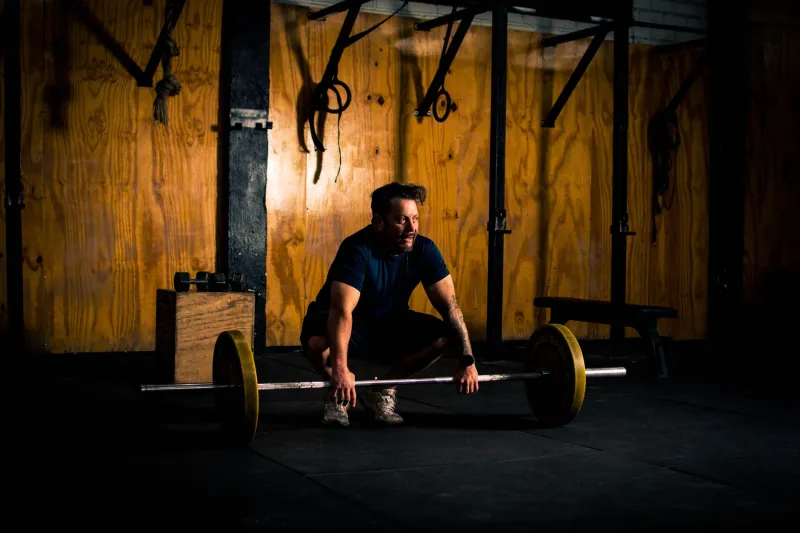
Asymmetry. Record yourself from the front and back during compound movements. Are your hips level during a deadlift? Does one shoulder dip during a push press? Asymmetry is almost always a sign of a compensating muscle group picking up slack for something that's not firing correctly.
Depth and range of motion. A squat that looks fine in your head might look completely different on screen. Many athletes are shocked to discover they've been cutting depth by two to four inches without realizing it.
Posture under fatigue. Film yourself at the start of a set and at the end. If your form degrades dramatically, that's not a technique problem — it's a strength endurance problem in a specific muscle group. Identify which part of your body breaks down first. That's your weak link.
Review footage weekly. It takes ten minutes and it will teach you more about your movement patterns than almost anything else.
Movement Pattern Evaluation: The Big Five Check
Beyond video, run yourself through a basic movement screen every four to six weeks. You don't need a certified FMS practitioner for a basic version — just five fundamental patterns:
- Single-leg balance — Can you hold a stable single-leg stand for 30 seconds with your eyes closed? Instability here points to ankle, hip, or core deficits.
- Deep squat — Arms overhead, feet shoulder-width. Can you hit depth without your heels rising or your chest collapsing forward?
- Hip hinge — Using a dowel rod or broomstick along your spine, can you hinge forward while maintaining three points of contact (head, upper back, tailbone)?
- Shoulder overhead reach — Lying flat, can you raise both arms overhead to the floor without your lower back arching?
- Rotational control — In a half-kneeling position, can you rotate through your thoracic spine without your hips shifting?
Score each one: moves cleanly, moves with compensation, or can't complete it. Any category that lands in the bottom two tiers is a training priority — not a warmup afterthought.
Performance Metrics That Tell the Real Story
Numbers don't lie, but you have to know which numbers to track. Most athletes monitor the obvious stuff — weight on the bar, mile pace, vertical jump. Those matter. But the metrics that reveal weak points are usually a little less glamorous.
Heart rate recovery. How fast does your heart rate drop in the two minutes after intense effort? Poor recovery speed often signals cardiovascular inefficiency or accumulated fatigue — and it tends to show up before your performance numbers drop.
Rate of perceived exertion (RPE) drift. If the same workout that felt like a 7/10 three weeks ago now feels like an 8.5/10 at the same load, something's off. Track your RPE session to session. Upward drift without load increases is a red flag for inadequate recovery or an oncoming overuse issue.
Velocity loss. For strength athletes, tracking bar speed with a simple velocity tracker (or even video slow-motion) across a set tells you when your nervous system is tapping out. A velocity drop of more than 20% within a set often means you're training past the point of productive adaptation.
Grip strength. Sounds oddly specific, but grip strength is a reliable proxy for overall systemic recovery and neurological readiness. Many elite strength coaches track morning grip strength as a daily readiness metric. A significant drop from your baseline? Your body is telling you something.
Build Your Attack Plan for Specific Gaps
Once you've run the diagnostic — video review, movement screen, and metric tracking — you'll have a clearer picture of where the cracks are. Now comes the part that separates serious athletes from the ones who stay stuck: you actually have to train the weaknesses, not just note them.
Here's a simple framework:
Prioritize, don't overload. Pick one to two weak points per training block (four to six weeks). Trying to fix everything at once is a great way to fix nothing.
Dedicate targeted work at the start of sessions. Weak point training goes first, when your nervous system is fresh and you can actually produce quality movement. Tacking corrective work onto the end of a hard session is mostly theater.
Measure progress. Go back to the same movement screen or the same performance metric in four weeks. Did it move? If not, the exercise selection might be off, or the volume isn't enough. Adjust and test again.
Accept that it's not always fun. Working on weaknesses rarely feels as satisfying as hammering your strengths. But this is exactly the kind of discipline that separates athletes who break through from athletes who just keep circling the same ceiling.
The Diagnostic Mindset Is a Competitive Edge
Here's the real talk: most of your competition isn't doing this. They're training hard — maybe as hard as you — but they're not stopping to ask the uncomfortable questions. They're not filming their deadlifts, they're not tracking RPE drift, and they're definitely not voluntarily spending time on the stuff they're bad at.
That's your opening.
The athletes who rise — the ones who keep improving long after others plateau — aren't always the most gifted. They're the most self-aware. They've built a practice of looking at themselves clearly, identifying what's actually broken, and going to work on it with the same intensity they bring to everything else.
Train hard. Rise stronger. And don't wait for the wall to fall before you look for the cracks.